
The Montana Experiment
Montana's new Right to Try law and the FDA decision it depends on

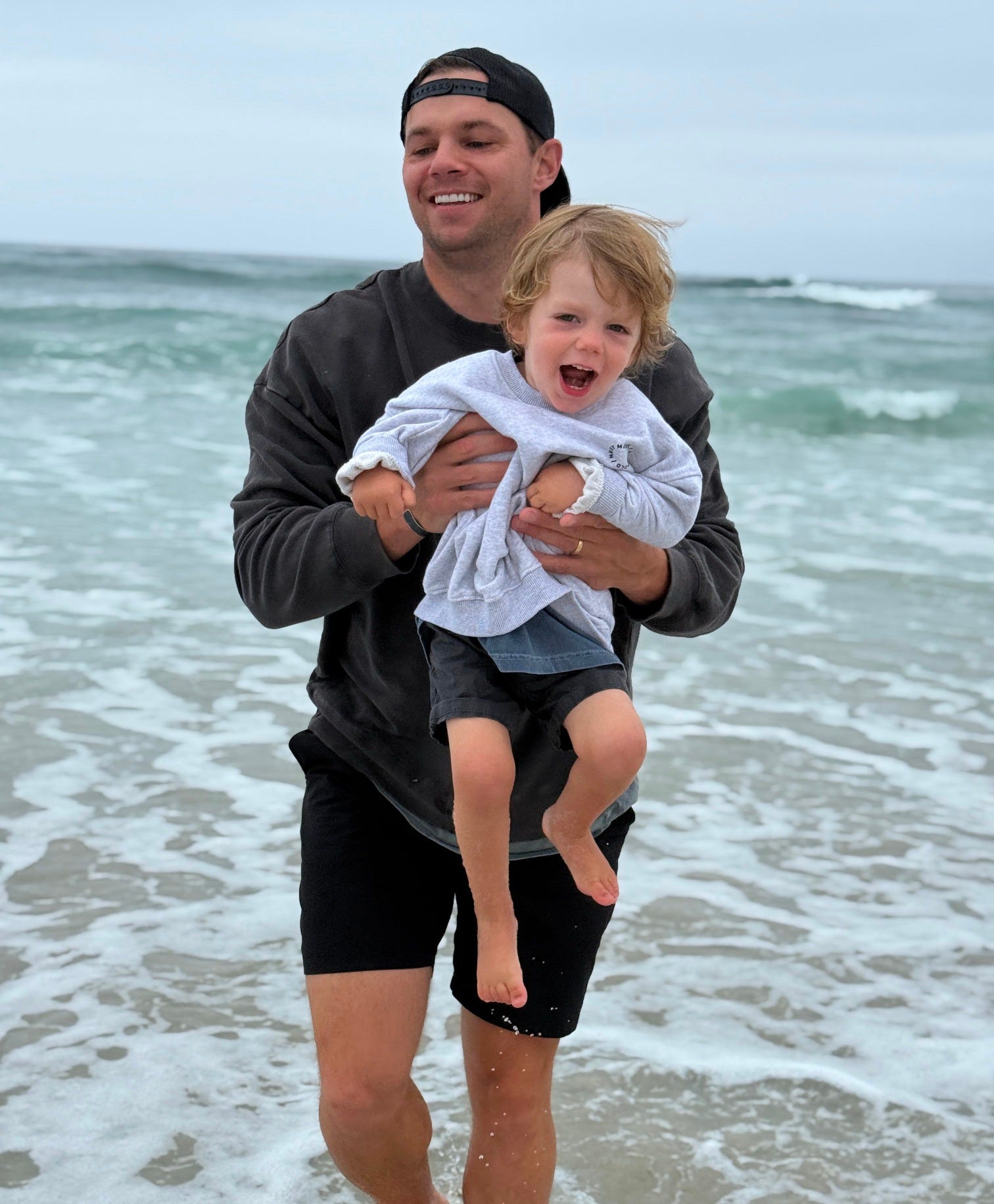
Brody DeVault is three years old. In January, his parents learned he has Creatine Transporter Deficiency, an ultra-rare metabolic condition that prevents creatine from being transported into his cells. There is no approved treatment.
“We literally sank to the floor while still on the phone with the geneticist,” his father, Kristofer DeVault, told me. “Walking into our little boy’s room felt like visiting a memorial. The life we thought we’d have with him felt like it had died on that call. It was an unspeakable kind of sad.”
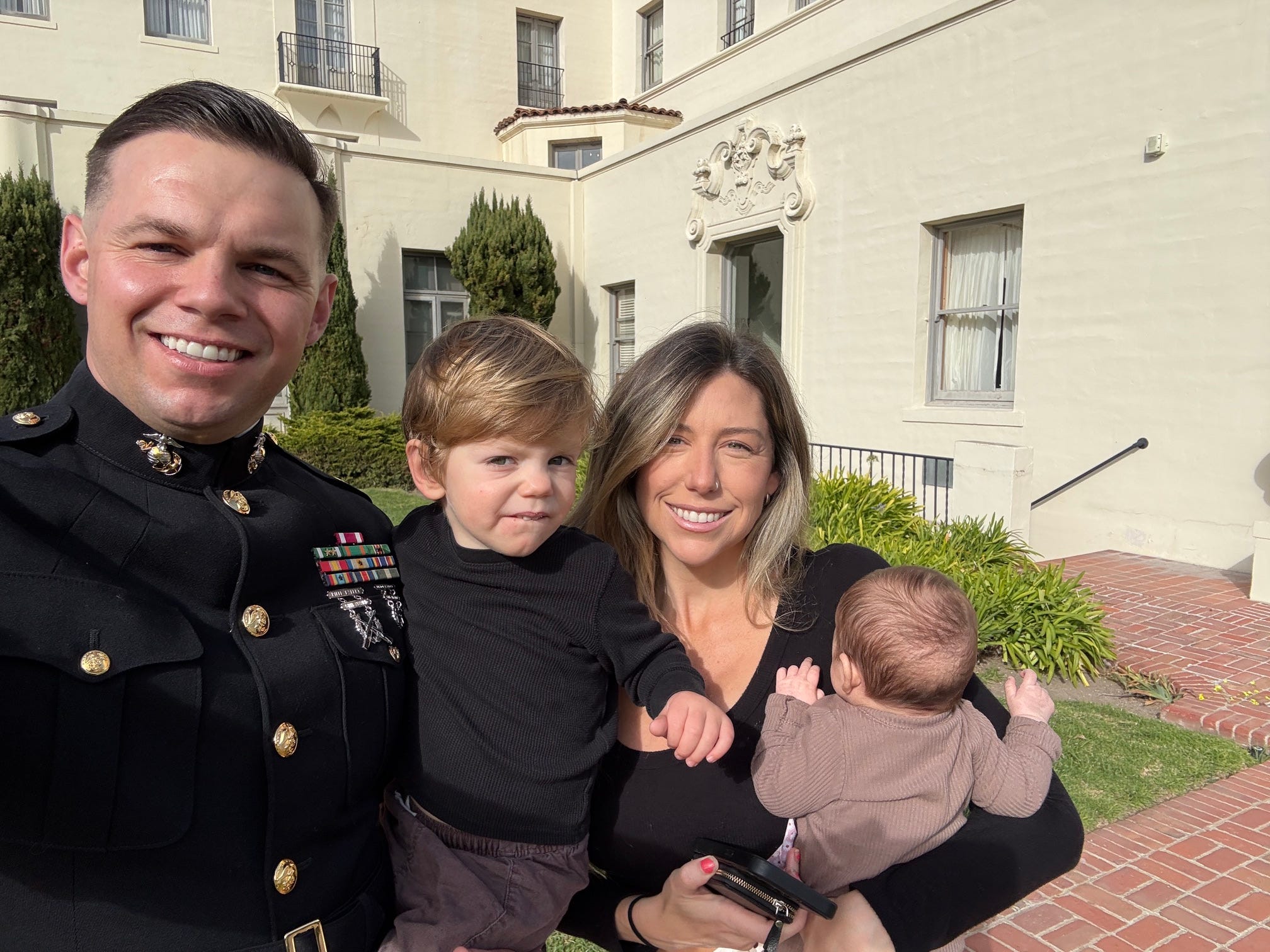
About 400 people on the planet have been diagnosed with CTD. The actual number is almost certainly higher, since most cases go undiagnosed. The condition causes intellectual disability, autism-spectrum features, seizures, and developmental delays. Treatment, when there is a treatment, has to happen during the window of childhood brain plasticity. That window is closing on Brody now.
A drug that might help him exists. It is in the pipeline of a biotech that has indicated it would consider providing the drug pre-approval. There is a state law in Montana, signed last May, designed to allow this kind of access. None of it has reached Brody.
Sixteen drugs
In 2018, congress passed the federal Right to Try (RTT) Act. The law was meant to give terminally ill patients access to drugs that had cleared Phase 1 trials but not yet been approved. In the seven years since, only sixteen drugs have been supplied through it.
For comparison, the FDA’s older Expanded Access program, which the 2018 law was supposed to improve on, approves roughly 99% of requests at a four-day median turnaround. Between 2010 and 2020 the FDA received 16,380 expanded access requests and granted 16,258 of them.
The RTT bottleneck on access is not the FDA. Federal Right to Try requires the company that owns the drug to provide it at cost. But small biotechs have margins that cannot absorb the legal, regulatory, and adverse-event monitoring overhead that participation requires. One bad outcome can jeopardize the company’s reputation with the investors funding its multibillion-dollar approval pipeline. For the operators weighing the request for early access, the math almost never makes sense.
This is not a contested view on either side of the RTT aisle. Arthur Caplan, the NYU bioethicist who is among the law’s most prominent critics, has spent the years since 2018 pointing out that “the FDA is not the obstacle to compassionate use. The proponents of the Right-to-Try laws demonize the FDA, but it is almost never the problem. The main challenge is the drug sponsors and companies.” Stephen Martin, the advocate currently lobbying Congress to expand Right to Try, describes the same dynamic in different words.
Kristofer DeVault reached the same conclusion on his own.
“I already knew the federal Right to Try law was a nightmare to navigate,” Kristofer said. “It gives a company developing a drug almost no reason to participate.”
He spent the early months of 2026 working every angle, including investigating whether he could manufacture a treatment for Brody himself.
“It is actually easier to make an experimental drug yourself than to navigate the existing pathways to access one,” Kris told me. “Just far more expensive.”
This was not rhetorical. By the time we spoke he had had formulation candidates made, located labs willing to manufacture, and collected quotes. He hasn’t gone ahead. He hasn’t ruled it out either.
Montana
Senate Bill 535 was signed by Montana Governor Greg Gianforte on May 12, 2025. It establishes a state licensure framework for what it calls Experimental Treatment Centers. Centers hold a license issued by the Montana Department of Public Health and Human Services, pay a $10,000 application fee and a $5,000 annual renewal, follow informed consent and adverse event reporting standards, and only offer treatments that have completed Phase 1 trials.
The key change is that the law lets biotechs charge a profit on those treatments. Two percent of the net annual profits of an Experimental Treatment Center go into a state Insurance Premium Support Account that subsidizes ACA marketplace premiums for low- and middle-income Montanans.
Stephen Martin’s full-time job, on behalf of an investor called Infinita VC, is to call the CEOs of biotech companies and ask them to ship their experimental drugs into Montana.
He has been doing it for about a year. Stephen says about 70% say “yes, if.” The “if” is the FDA committing not to punish them for participating.
New Hampshire passed a similar bill, HB 701, in August. Eighteen states have passed a second variant of Right to Try that covers personalized treatments based on a patient’s specific genetic profile. The Goldwater Institute, which has been writing the model statutes for these laws for over a decade, calls them “Right to Try 2.0” laws. They are designed for n-of-1 therapies that were impossible to imagine when the original federal law was drafted. In February 2025, a team at Children’s Hospital of Philadelphia produced a custom base-editing CRISPR therapy for a baby named KJ Muldoon in about six months. The state laws are now ahead of the federal regulatory framework.
Brody’s case qualifies under Montana SB 535. The treatment Kristofer has identified would be a candidate. The company that makes it, he said, is “genuinely interested in participating, if the FDA risk could be taken off the table.”
Discretion
The FDA risk is that the agency retains authority over the company’s Investigational New Drug application, and could in principle withdraw the IND or otherwise penalize the company for participating in the Montana program. No one I spoke to thinks the FDA actually would do this. But “in principle, the FDA could” is enough to keep most biotech boards from approving participation.
What advocates are asking the FDA for is a piece of guidance that promises the agency will not punish companies that participate in state-licensed Right to Try programs meeting defined safety and reporting standards. “If I were on the regulatory council of a company weighing whether to participate in Montana’s Right to Try framework,” Kristofer said, “I’d want one thing in writing: a statement that the FDA will not punish companies for participating. That alone would mitigate the regulatory risk.”
This kind of guidance is called “enforcement discretion.” It is how the FDA regulates compounding pharmacies. It is how the FDA has regulated laboratory-developed tests since 1976. It is how the FDA tolerates the vast majority of off-label prescribing. The agency has used this tool hundreds of times. It has not used it for state Right to Try laws.
Kristofer made two trips to Washington this year with Stephen Martin to talk to senators and house members. He found most offices receptive.
“Most policymakers and their staff cared about the issue and wanted to help,” he said. “There was one office that opposed the idea, though. They kept pointing to the fact that federal Right to Try, expanded access, and compassionate use pathways already exist. They asked, ‘What if the big drug companies sue the FDA for allowing this to undercut their profits?’”
But the pathways they were pointing to are the ones that have produced sixteen drugs in seven years. The lawsuit concern is not one legal analysts of state Right to Try laws have flagged. Drug companies don’t typically sue the FDA over enforcement discretion decisions.
Kris thinks the ask is more tractable than people assume. “What we’re asking is for the FDA to let states exercise their own expanded Right to Try laws without federal interference.”
Doubt
There are reasons to be cautious about Montana’s pilot. Critics like Caplan and NYU’s Alison Bateman-House have spent years pointing out that Phase 1 trials demonstrate safety, not efficacy. About 90% of drugs that enter Phase 1 ultimately fail in Phase 2 or 3. A “Phase 1 complete” drug is not a drug that has been shown to work.
Allowing biotechs to charge a profit on a Phase 1 drug creates an incentive structure that could in theory distort behavior in bad ways. Companies could choose to keep selling under Right to Try indefinitely rather than do the more expensive Phase 2 and 3 trials. Bad products could slip through. Desperate families could be exploited.
I think those concerns are valid. We do not actually know how Montana’s incentive structure will play out. But what we have now is not working, and families are suffering for lack of access.
Federal Right to Try was itself a policy experiment. We ran it for seven years. It produced sixteen drugs. We learned that voluntary participation with at-cost pricing does not move biotech behavior. Montana is the next experiment, this time with profit on the incentive side. The only way to find out whether it works is to operate it.
This pattern of state experimentation in healthcare incentives has proven effective before. In 2019, Louisiana cut a Netflix-style subscription deal with Gilead for Hep C drugs. Washington did something similar. Several states have piloted outcomes-based contracts and installment payments for gene therapies like Zolgensma and Spinraza. CMS is currently running a Cell and Gene Therapy Access Model for sickle cell. In each case, the federal government let states test new payment structures and we learned from the results.
The drug approval system is built on the premise that we cannot predict efficacy or safety from theory, which is why we run Phase 1, 2, and 3 trials. Incentive design deserves the same humility.
Drug development costs have doubled every nine years for seven decades. Kris told me this is called “Eroom’s Law”. It’s the fucked up inverse of Moore’s Law. We have spent that time mostly trying to solve the underlying problem with technology. State-level experiments on incentive structures are one of the few levers that has worked, and one we have barely used.
Today
Brody is on a drug called Ravicti, originally approved for urea cycle disorders. Some researchers think it may help chaperone creatine across the blood-brain barrier and into cells; recent Cornell work suggests it also helps control seizures in CTD patients. Kris is not sure how much it is helping Brody. His insurance covers it. Without insurance, the list price would be approximately $180,000 a month.

“That price is driven by the staggering cost of drug development,” Kristofer told me, “and in this drug’s case, by cost inflation from acquisition.”
But the treatment that might actually help Brody, the one in the biotech’s pipeline, is not commercially available anywhere. Kristofer has been in direct contact with the medicinal chemists developing it and has read the data closely. He is one of a small number of CTD parents with the resources, network, and time to push for it personally.
“If I had to scale Everest every month to get my son his treatment, I would,” he said. “Enthusiastically.”
There are about 10,000 known rare diseases. Around 5% have any approved treatment at all. Most of the families navigating the other 9,500 don’t have someone who can spend two days a week in Washington.
A few things I’m pretty sure of after writing this:
The existing pathways for pre-approval drug access don’t work well enough. The economic incentives are misaligned: companies have to provide drugs at cost, absorb the legal and reputational risk, and get almost nothing back. Sixteen drugs in seven years is what those incentives produce.
States like Montana are trying to fix that. SB 535 lets biotechs charge a profit, changing incentives for access.
I don’t know if it will work. Nobody does. But a scoped state pilot is a promising environment to test it. The blast radius is small if it goes wrong, and the upside is access for families like Brody’s if it goes right.
The next FDA Commissioner can decide whether the experiment runs. The ask is one piece of discretionary guidance. If you have a line into the agency or administration, please consider discussing this with them.
If you’d like to get involved, the Senate will vote on the next FDA Commissioner soon. Your Senators’ DC offices take calls (numbers here). A version of what you could say:
“Hi, I’m a constituent. There are families like Kristofer DeVault’s whose three-year-old has a rare disease that could be treated under state Right to Try laws, but companies won’t participate without FDA enforcement discretion. Would the Senator consider making a public statement on this before voting on the next FDA Commissioner?”